Unlocking Creative Potential with the Allbine Experimental Display Typeface
In the ever-evolving landscape of graphic design, typography is rarely just about legibility; it is about personality, voice, and the immediate emotional connection a viewer makes with a piece of content. Designers are constantly hunting for that perfect typeface that bridges the gap between artistic expression and functional communication. Enter Allbine, an experimental display typeface that has quickly captured the attention of creatives looking to inject a sense of fun, character, and uniqueness into their projects. Unlike standard sans-serifs that blend into the background, Allbine demands attention, offering a visual experience that feels both nostalgic and refreshingly modern.
The Character of Playfulness
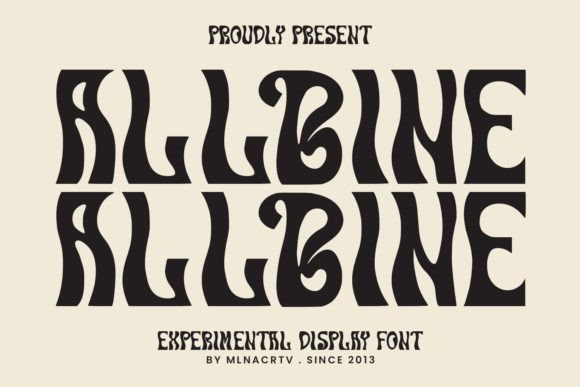
At its core, Allbine is defined by its distinct character. It does not shy away from quirks. As an experimental font, it breaks several traditional rules of typesetting to create a vibe that is undeniably lively. The letterforms possess a certain bounce and irregularity that mimics hand-lettering while maintaining the precision of digital vector art. This "fun character" is not merely a gimmick; it serves a strategic purpose in branding and media. When a brand wants to appear approachable, youthful, or innovative, a rigid geometric font often fails to convey that message. Allbine, however, speaks directly to that demographic.
The beauty of this typeface lies in its ability to tell a story before a single word is read. The strokes vary in thickness in unexpected places, and the terminals of the letters often flare or taper in ways that suggest movement. This dynamic quality makes it an exceptional choice for movie titles and book covers. Imagine a comedy film poster or a whimsical children's book; the typography sets the stage immediately. The audience knows, within seconds of seeing the title rendered in Allbine, that the content ahead will be entertaining and lighthearted.
Ligatures and Alternates: The Designer's Playground
One of the most compelling features of the Allbine font family is its extensive support for ligatures and alternates. For the uninitiated, ligatures are special characters that combine two or more letters into a single glyph to improve spacing and aesthetics. Alternates are different versions of the same letter, allowing for stylistic variation. In the context of Allbine, these features are not just technical additions; they are creative tools.
When designing a logo, uniqueness is paramount. You do not want your client's brand to look like it was built with default settings. By utilizing the alternate characters available in Allbine, a designer can construct a logotype that feels custom-drawn. You might swap a standard 'a' for a more looping variant, or engage a specific ligature that connects an 's' and a 't' in a fluid, continuous motion. This level of customization gives the designer extra creative work, transforming the font from a static tool into a collaborative partner in the design process. It allows for the creation of wordmarks that have a bespoke feel without the time investment of drawing every letter from scratch.
Beyond the Headline: Versatility in Application
While display fonts are often relegated strictly to large headings, Allbine surprises users with its versatility. Yes, it shines brightest in social media graphics, where stopping the scroll is the primary goal. A vibrant Instagram post or a YouTube thumbnail utilizing Allbine's bold shapes will naturally draw the eye amidst a sea of generic content. However, its utility extends further than just short bursts of text.
Surprisingly, Allbine performs well even in short text blocks and, in some contexts, longer-form content when used strategically. Because the characters are distinct and highly readable at various sizes, they can be used for pull quotes, call-out boxes, or introductory paragraphs that need to stand out from the body copy. The key is balance. When using such a characterful font for anything beyond a headline, pairing it correctly becomes essential.
This brings us to one of Allbine's strongest suits: its role as a secondary text font. While it can lead the charge as a primary header, it pairs beautifully with more subdued typefaces. Imagine an editorial layout where the headlines scream with the energy of Allbine, but the body text is set in a clean, neutral serif or a minimalist script. This contrast creates a hierarchy that guides the reader's eye effortlessly. The script font adds elegance, the serif adds authority, and Allbine adds the spark of creativity that keeps the page from feeling sterile.
A Global Voice: Multilingual Support
In our interconnected world, a font's utility is often limited by its language support. Many trendy display fonts are restricted to basic Latin characters, making them useless for international campaigns. Allbine shatters this limitation with support for more than 100 languages. This is a massive advantage for agencies and freelancers working with global clients.
Whether you are designing packaging for a product launching in Europe, creating signage for a multicultural event, or developing a website with a diverse audience, Allbine ensures consistency across languages. The character and "fun" vibe remain intact whether you are typing in English, French, German, Spanish, or numerous other supported languages. This extensive glyph set means you do not have to switch fonts mid-project when a client requests a translation. The visual identity remains cohesive, preserving the brand's personality regardless of the tongue it speaks.
Practical Workflows and Modern Design Trends
Integrating Allbine into a modern workflow is seamless. Its OpenType features are accessible through major design software like Adobe Illustrator, Photoshop, and InDesign. Designers can easily toggle through alternates using the Glyphs panel, experimenting with different combinations until the composition feels right. This interactivity encourages exploration. Instead of settling for the first option, the availability of variations invites the designer to try five or six different configurations of a logo mark.
Furthermore, the rise of digital-first branding means that fonts must perform well on screens of all sizes. Allbine's bold strokes and open counters ensure that it remains legible even on small mobile displays. This makes it ideal for app interfaces, particularly for buttons or notification headers that need to convey a friendly tone. In the realm of social media, where trends move rapidly, having a font that feels current yet timeless is invaluable. Allbine strikes this balance, avoiding the overly distressed look of grunge fonts or the hyper-minimalism of tech fonts that often date quickly.
Making the Right Choice for Your Project
Before adopting any new typeface, designers consider several factors: readability, licensing, versatility, and emotional resonance. Allbine checks these boxes with flying colors. Its emotional resonance is high; it projects joy and creativity. Its versatility is proven by its multilingual capabilities and pairing potential. But perhaps most importantly, it solves the problem of "generic design."
Consider a scenario where a coffee shop wants to rebrand. They want to move away from the hipster minimalist aesthetic and embrace a warmer, community-focused vibe. Using Allbine for their signage and menu headers instantly communicates warmth. If they pair it with a handwritten script for the daily specials, the combination feels organic and inviting. Similarly, for a tech startup that wants to appear human-centric rather than cold and corporate, Allbine can soften their visual identity, making their innovations feel accessible to the average person.
The decision to use an experimental font like Allbine is also a statement of confidence. It suggests that the brand or creator is not afraid to stand out. In a marketplace saturated with safe choices, taking a risk with typography can yield significant rewards in brand recall. People remember what makes them smile or what catches their eye, and Allbine is engineered to do exactly that.
Ultimately, the value of Allbine lies in its ability to elevate the mundane. A simple sentence becomes a statement; a basic logo becomes a memorable icon. By leveraging its ligatures, alternates, and robust language support, designers can create stunning works that resonate across cultures and mediums. Whether you are titling the next blockbuster movie, designing a viral social media campaign, or typesetting a novel, Allbine offers the tools to make your work distinctly yours. It is more than just a font; it is a catalyst for creativity, inviting designers to play, experiment, and push the boundaries of what text can look and feel like.